Cast or extruded acrylic? Cast acrylic (GS) gives a whiter laser engraving, machines and bonds better and is available in large thicknesses and special colours; extruded acrylic (XT) has a more uniform thickness, bends better with heat and is usually cheaper. For straight cuts without engraving, either will do. Here is how to decide based on what you are going to do with the sheet.
Quick answer: cast or extruded?
If the part is going to be laser engraved, bonded or milled in detail, choose cast acrylic. If it is going to be hot bent or needs a very consistent thickness, choose extruded. If it only needs a straight cut, let the price and the availability of the thickness and colour decide.
In the workshop we sum it up like this:
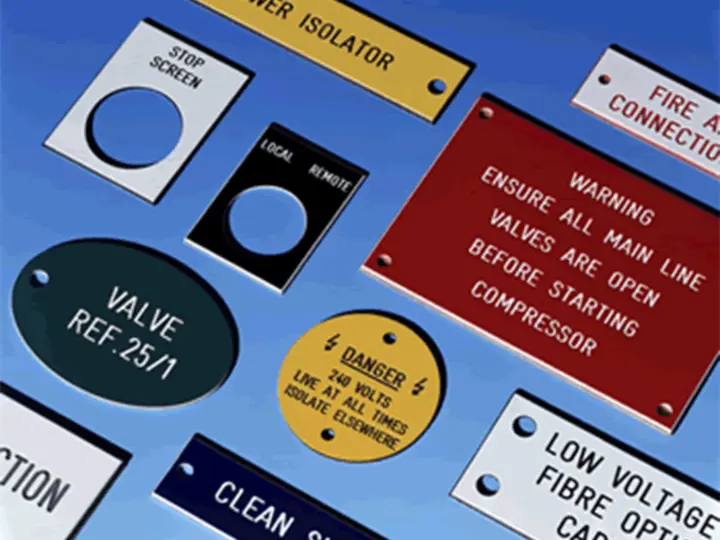
- Awards, plaques and engraved parts → cast, for the contrast of the engraving. We see it every day in our custom acrylic awards.
- Brochure holders, displays and bent parts → extruded, which responds better to heat.
- Blocks, large thicknesses and colours matched to a sample → cast.
- Flat parts with straight cuts → either.
How each is made (and why it matters)
The difference lies in the process: cast acrylic is polymerised inside a mould, while extruded acrylic is formed by melting pellets and passing them through rollers. Almost all their differences in behaviour in the workshop stem from that origin.
- Cast acrylic (GS in the Plexiglas® range). The liquid monomer is poured between two glass plates that act as a mould and hardens with slow heating. The result is a material with long molecular chains and little internal stress.
- Extruded acrylic (XT in the Plexiglas® range). PMMA pellets are melted and pushed between rollers that calibrate them as they cool, forming a continuous sheet that is then cut into panels. The thickness comes out very consistent, but the material retains stresses in the direction in which the sheet travelled.
We work with both types from the Plexiglas®, Altuglas® and Irpen® brands. The technical name for both is polymethyl methacrylate (PMMA), also known as acrylic; Plexiglas®, the best-known brand, has been on the market since 1933.
What they have in common
At first sight they look the same and they share the properties that make acrylic useful: transparency of up to 93%, good resistance to weathering and UV rays without yellowing, impact resistance far higher than glass at half the weight, and the fact that neither can be bent cold.
That is why, in a clear part that is cut and not engraved, the end customer will not notice the difference. The differences appear when the material is worked.
Differences between cast and extruded acrylic
The table shows what really changes in manufacturing. Exact values (tolerances, temperatures) vary by manufacturer and thickness: if your project depends on them, we can provide the technical data sheet for the specific sheet.
| Characteristic | Cast (GS) | Extruded (XT) |
|---|---|---|
| Thickness | Less calibrated: varies somewhat across the sheet | Very uniform |
| Laser engraving | White and crisp, with high contrast | Acceptable, more transparent and with less contrast |
| Laser cutting | Polished edge | Polished edge |
| CNC milling | Clean chips, good finish | Tends to melt and clog the cutter if the speed is not adjusted |
| Hot bending | Acceptable | Better: needs less heat and bends more easily |
| Behaviour when heated | Stable | May shrink in the direction of extrusion |
| Solvent bonding | Good | Higher risk of micro-cracks next to the joint |
| Sensitivity to alcohol and solvents | Lower | Higher (micro-cracks, especially on cut edges) |
| Thicknesses and special colours | Wide range; colours can be matched to a sample | Standard range |
| Indicative price | Higher | Lower |
What to choose for each technique
The practical rule is to choose the type that best handles the most delicate operation on the part. If a part is engraved and also bent, the operation that matters most to the final result decides.
Laser engraving
Engraving on cast acrylic comes out white and frosted, even on black. On extruded acrylic the engraving is more translucent. For logos, text and recognition pieces, choose cast. You can see the technique in our laser engraving service.
Laser cutting and machining
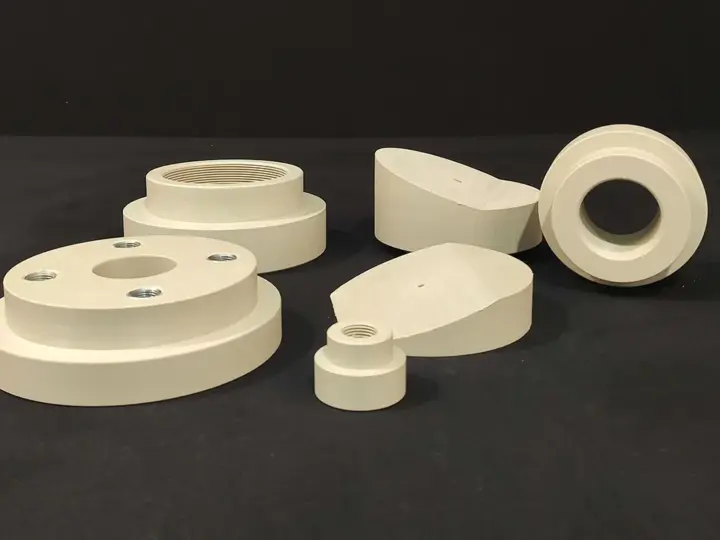
In laser cutting, both leave a polished edge. The difference comes afterwards: a laser-cut edge concentrates stress and, on extruded acrylic, micro-cracks are more likely to appear if it is cleaned with alcohol or bonded. In milling, cast gives a better finish. We explain it in how acrylic is laser cut and in the guide which plastic to choose for machining.
Bending and thermoforming
Extruded acrylic is the easiest to bend: card holders, brochure holders, tiered displays or screens with a fold. Bear in mind its slight shrinkage when heated, especially in long parts. It is the basis of our acrylic thermoforming.
Bonding and parts in contact with chemicals
Display cases, boxes and critical bonded parts turn out better in cast acrylic, which tolerates solvent-based adhesives better. If extruded acrylic is used, it is advisable to anneal the part before bonding to relieve stress. And in both cases: no alcohol or solvents for cleaning.
Large thicknesses and special colours
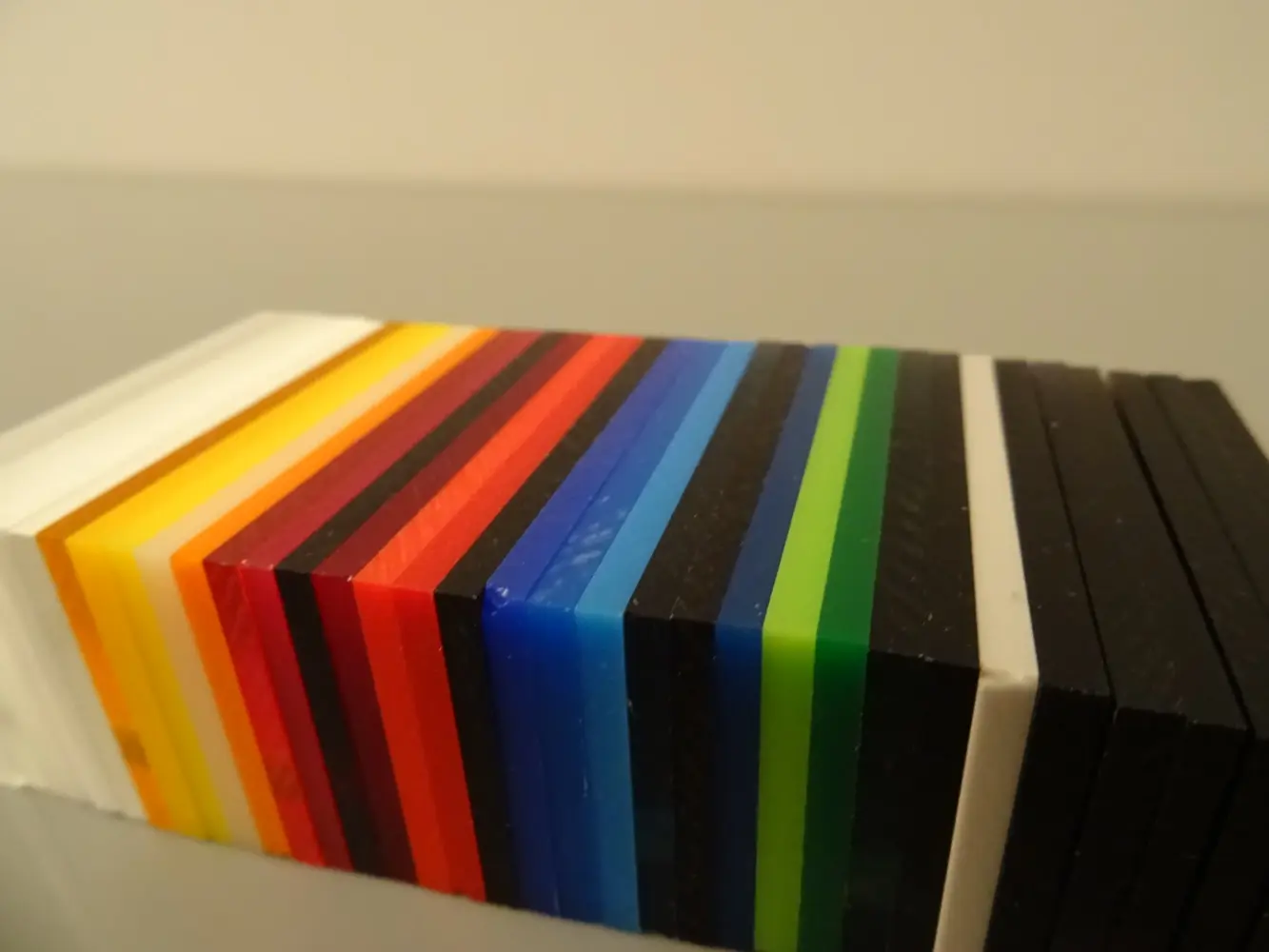
Blocks and large thicknesses are cast acrylic territory; so are colours outside the catalogue, which can be matched to a sample. We cut acrylic from 2 to 100 mm; you can find the range of colours by thickness in custom acrylic cutting.
How to tell which type of sheet you have
The reliable way is the protective film: manufacturers usually print the brand and type on it (for example, GS or XT on Plexiglas®). Once it is removed, they cannot be told apart by eye.
There are clues: a very white laser engraving points to cast, and a very consistent thickness to extruded. But they are not proof. If you are going to order parts from sheets you already have, keep an offcut with the film on or tell us the purchase reference.
When to order from a workshop
If your part combines several techniques (engraving and bending, bonding and milling), the sensible thing is to let the workshop choose the sheet, because it knows how each reference responds on its machines. Just tell us what the part is for, the dimensions, the edge finish and the quantity: at Apligam we cut the sheet to your size in the right type and, if needed, engrave, bend or machine it in the same workshop.
If you only need a standard sheet cut to size, you can buy online from Crilato, our online shop (in Spanish), with an instant price: clear acrylic sheet. It is cut in this same workshop.
Frequently asked questions
Which is cheaper, cast or extruded acrylic?
In general, extruded acrylic is cheaper because it is made continuously, while cast acrylic is made sheet by sheet in moulds. The difference depends on the thickness, colour and brand. For straight cuts and flat parts without engraving, extruded is usually enough; for engraved or very thick parts, cast is worth it.
Can extruded acrylic be bonded?
Yes, but with more care. Extruded acrylic retains more internal stress and, with solvent-based adhesives, it can crack near the joint or the cut edge. To prevent this, stress is reduced by annealing beforehand, a suitable adhesive is chosen and the area is kept away from alcohol. For critical bonded parts, we prefer cast.
Can you tell from the finished part whether it is cast or extruded?
In a clear part that is cut and not engraved, practically not: the transparency and gloss are the same. You can tell from the laser engraving, which is whiter on cast acrylic, and over time on parts that are bonded or cleaned with aggressive products, where extruded acrylic is more prone to micro-cracks.
Which holds up better outdoors?
Both withstand weathering and UV radiation well without yellowing, which is one of the advantages of acrylic over other transparent plastics. Outdoors, the thickness, the fixing method and thermal expansion matter more than the way the sheet was manufactured.
Can either of them be bent cold?
No. Neither cast nor extruded acrylic can be bent cold: they break. Both are bent or curved with heat; extruded responds better and is the one we use by default for bent parts. If you need to curve cold, the right material is polycarbonate.