The most useful acrylic POS ideas are countertop displays, brochure holders, price holders, plinths, branded dispensers, backlit pieces, brand plaques and custom counter screens. Acrylic pays off compared with cardboard when the piece will stay at the point of sale for months, will be handled every day or has to convey quality. For campaigns lasting a few weeks and very large runs, cardboard is still cheaper.
When acrylic POS makes sense
Acrylic POS (point-of-sale material) is the right choice for permanent or semi-permanent pieces: those that stay on the counter, the shelf or in the shop window for months. Its advantage is not the price per unit, but how long it lasts and how it looks.
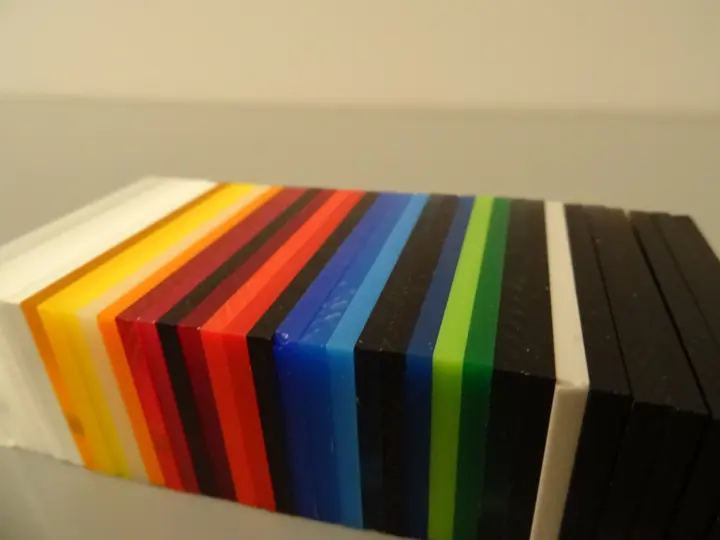
Acrylic withstands daily use, cleaning and humidity far better than paper or cardboard; it is transparent and glossy, takes full-colour printing directly on the surface and can be cut, bent and engraved into two- and three-dimensional pieces. Its weak point: it scratches with metal objects, so it is not suitable for pieces subject to constant rubbing.
Acrylic, cardboard, PVC or Dibond®: comparing POS materials
Choosing the material is the first decision for any POS piece, and it depends above all on how long the campaign will last and how many units are needed.
| Criterion | Acrylic | Cardboard | Foam PVC | Dibond® (composite) |
|---|---|---|---|---|
| Lifespan at the point of sale | Years | Weeks | Months to years | Years |
| Appearance | Clear or coloured, glossy, “premium” | Printed, matt | Opaque, matt | Metallic, flat |
| Resistance to use and cleaning | High (scratches with metal) | Low | Medium | High |
| 3D pieces | Yes: hot bending, bonding | Yes: die-cutting and folding | Limited | Folding with routed grooves |
| Printing | Direct UV, also reverse-printed on the back | Offset or digital | Direct UV | Direct UV |
| Reuse | Yes, by changing the vinyl or insert | No | Partial | Yes |
| Cost per unit | Medium to high | Low in large runs | Low to medium | Medium |
| Best for | Permanent POS, image-led brands, product on display | Short, large-scale campaigns | Posters, panels, internal dividers | Durable signs and panels |
Many pieces combine materials: an acrylic structure with foam PVC internal dividers, or a Dibond® panel with acrylic elements.
Types of acrylic POS
These are the most common types. For each one we indicate where it works and which technique it usually involves.
Countertop displays
Pieces for the counter or the till: they present a product, a new launch or a promotion. They usually carry the brand with UV printing on acrylic on the back face and are laser cut to follow the outline of the logo.
Brochure and document holders
Countertop or wall-mounted, with one pocket or several, in A4, A5 or DL. They are made from a single hot-bent piece, without bonding, and can carry the logo engraved or printed. See custom acrylic brochure holders.
Price and sign holders
L-shaped or T-shaped holders for prices, menus or short messages. They are the simplest and most reusable POS: the sign changes, the holder stays.
Plinths and risers
Bases to make a product stand out in cosmetics, jewellery, electronics or drinks. In clear acrylic the product seems to float; in black or white, it gains contrast. They can carry the logo engraved on the front.
Branded dispensers
Displays that also dispense the product: coffee capsules, samples, sweets, teaspoons. They combine function and brand, and usually have internal dividers and a lid. See custom acrylic displays.
Backlit pieces
Opal white acrylic diffuses light and makes counter signs, light boxes and illuminated plinths possible. Clear laser-engraved acrylic, lit from the edge, makes the engraving glow. A striking example: an illuminated display that makes a bottle levitate and spin using magnets.
Brand plaques and signs
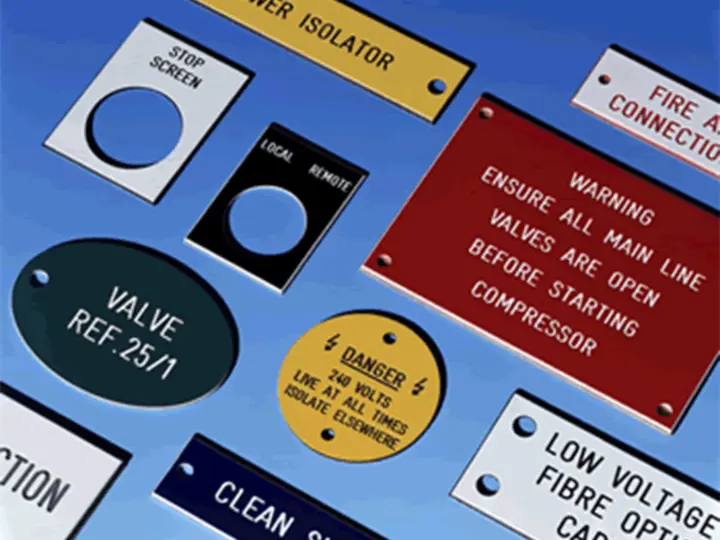
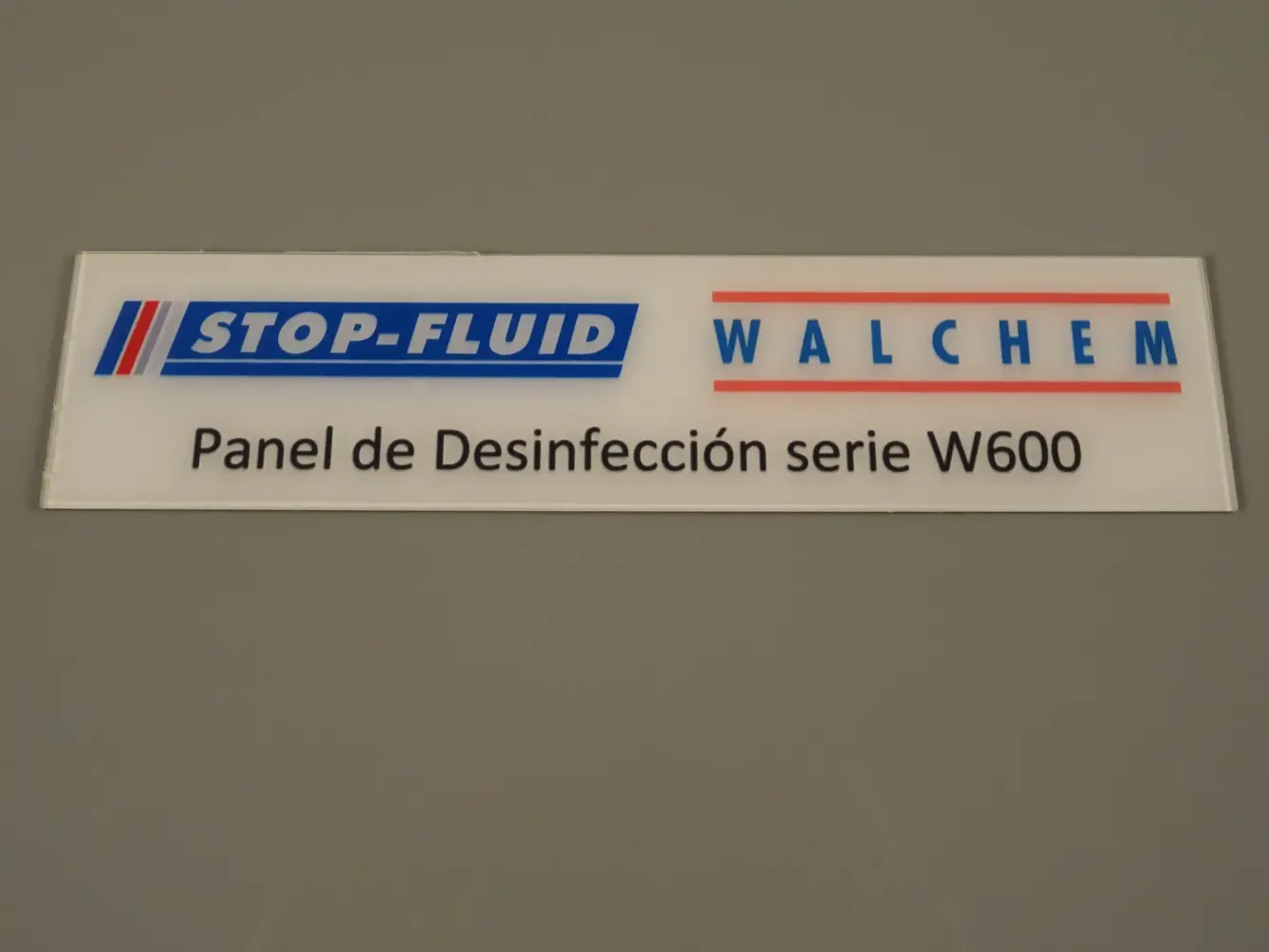
Wall plaques with the corporate identity, opening hours and directories, with stand-off fixings to mount them away from the wall. They are POS and signage at the same time: see acrylic signage.
Custom counter screens
A counter screen is also an advertising medium: with direct printing and cut to size, it protects staff and communicates the brand. More in screens for counters and offices.
Ideas by type of business
Each sector has its typical pieces. This table gathers ideas based on real jobs from our workshop:
| Business | Acrylic POS ideas |
|---|---|
| Pharmacies and health shops | Tiered displays for small products, displays for jars with UV printing, countertop brochure holders |
| Perfumeries and cosmetics | Display modules, plinths, countertop brand displays |
| Hospitality and cafés | Branded capsule dispensers, menu holders, engraved napkin holders, bar signs |
| Drinks and food | Illuminated bottle glorifiers, product displays with logo |
| Hotels | Displays for in-room information, with a pocket for the remote control |
| Clinics and offices | Dispensers with lid and engraving, opening-hours and directory plaques |
| Tobacconists and local shops | Printed counter screens, opening-hours plaques |
Changing campaigns: vinyl and interchangeable inserts
If the message changes often (offers, seasons, opening hours), the most cost-effective approach is to separate the structure from the graphic. The acrylic piece is made once and the message is renewed for little money.
- Vinyl on acrylic. Adhesive vinyl is applied to the sheet and removed without damaging it. It works on shopfronts, doors, shop windows and display cabinets.
- Inserts. A slot or pocket where a poster printed on paper or thin PVC is placed.
- Direct UV printing. It is the most durable option, but the message is fixed: keep it for the brand and whatever does not change.
How to brief a POS order
A good brief saves samples and corrections. If you are an agency or a brand’s trade marketing department, send us:
- Where the piece goes: counter, shelf, shop window, wall, outdoors.
- What it has to do: communicate, display product, dispense, light up.
- Maximum dimensions of the space and of the product it holds.
- Units and number of points of sale.
- Duration of the campaign and whether the message will change.
- Final artwork in vector format, with the reference brand colours.
- Transport: whether the pieces travel to several shops and whether they should be demountable.
If you do not have a design, give us a reference or a sketch and we will propose the piece.
When to order it from a workshop
Order it from a workshop when the piece is not available from a catalogue, when it needs your brand’s shape or colours, or when it will be distributed across a series of shops and all of them must be identical. At Apligam we make acrylic POS for agencies, brands and shops, combining UV printing (up to 3050 × 2050 mm), laser engraving and acrylic thermoforming in the same workshop, from a prototype to the full run.
For brochure and sign holders in standard sizes there are standard models with prices at Crilato, our online shop (in Spanish): A5 four-pocket brochure holders and the rest of the acrylic products shop.
Frequently asked questions
When does acrylic POS pay off compared with cardboard?
When the piece will be at the point of sale for more than a few weeks, when it will be handled every day or when the brand needs a quality image. Cardboard is cheaper for short campaigns and very large runs, but it deteriorates with use and humidity. Acrylic lasts for years, can be cleaned and can be reused by changing the graphic.
Can the message on acrylic POS be changed without making a new piece?
Yes, if it is designed for it. There are two common solutions: applying adhesive vinyl to the sheet, which is removed and replaced for each campaign, or including a slot or pocket where a printed poster is inserted. The acrylic structure stays and only the graphic is renewed, which makes later campaigns cheaper.
Can acrylic POS be illuminated?
Yes. Opal white acrylic diffuses light evenly and is the basis of many backlit pieces: counter signs, light boxes or plinths that highlight the product. Clear laser-engraved acrylic can also be edge-lit, which makes the engraving glow.
Does printing on acrylic hold up in a sunny shop window?
Acrylic withstands UV radiation without yellowing. To protect the image, it is usually printed on the back face, in mirror image, so that the ink sits behind the material and is protected from rubbing. How long the colours last under direct, prolonged sunlight depends on the inks; if the piece will be in a very sunny shop window, let us know when you order.
What is the difference between a countertop display and a counter display unit?
In practice the terms are used as synonyms. If a distinction is needed, a countertop display is usually a communication piece (a sign, a price holder, a block logo) and a counter display unit holds product (boxes, jars, samples). Many POS pieces combine both functions: they display product and carry the brand.