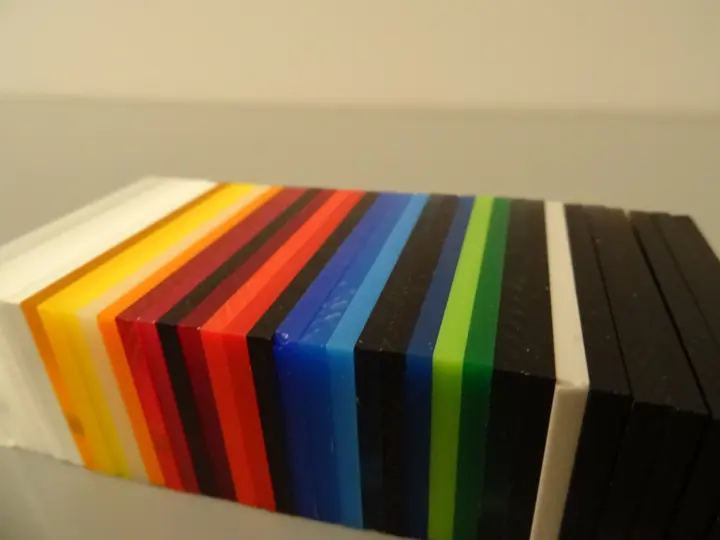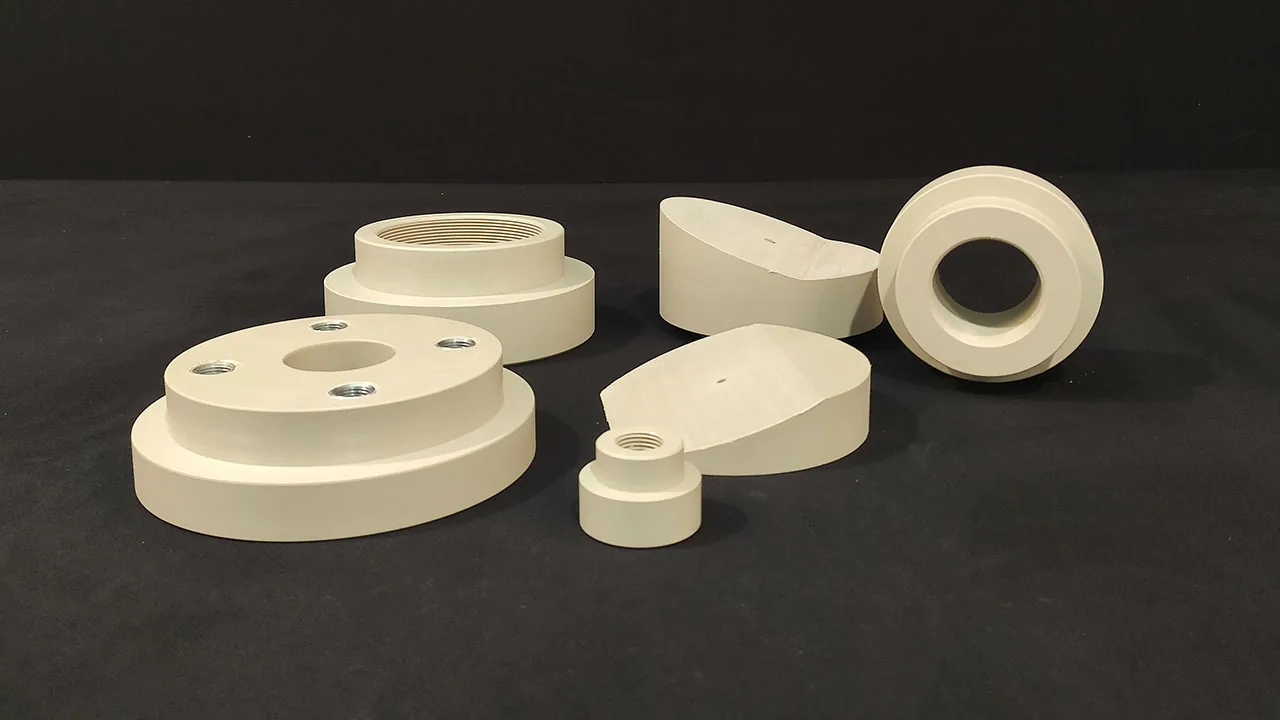
To decide which plastic to choose for machining, start with what the part is for: acrylic if it needs transparency and a good finish; polycarbonate if it will also take knocks; PE 1000 polyethylene (UHMW-PE) if it will rub or wear; polypropylene or PVC if it will be in contact with chemicals; and foam PVC or Dibond® for lightweight panels. The price and lead time of the sheet then decide between the options that work.
Quick answer by what the part needs
Each engineering plastic excels in one or two properties and falls short in others. This is the usual choice in our workshop for the most common uses:
- Visors, lids, boxes and laboratory parts that need to look good → acrylic.
- Guards, protective covers and housings that may take impacts → solid polycarbonate.
- Guides, wheels, skids, cutting boards and food machinery parts → PE 500 or PE 1000 polyethylene.
- Tanks, trays and parts in contact with chemicals → polypropylene or solid PVC (depending on the product).
- Panels, fronts and lightweight signage → foam PVC or composite panel (Dibond®).
What milling or machining is
Milling means removing material, in the form of chips, with a rotating multi-edged tool called a cutter. It is used to cut outlines, drill, pocket, bevel and make recesses and joints; machining covers all those operations. With numerical control (CNC), the machine follows the computer design and repeats every part exactly the same.
Six questions before choosing the plastic
Before talking about materials, it is worth answering these six questions. With them we rule out half the options and avoid parts that fail in use.
- Does it have to be transparent? If so, acrylic or polycarbonate.
- Will it take knocks or sudden loads? Polycarbonate withstands far more than acrylic.
- Will it rub, rotate or slide? High molecular weight polyethylene.
- Will it be in contact with food or chemicals? The specific material and grade must be chosen, with its documentation.
- At what temperature does it work? Acrylic withstands continuous use up to about 70–80 °C; polycarbonate, up to about 130 °C.
- What finish does it need? Only acrylic polishes to a glass-like gloss; the others are left satin or matt.
Comparison of plastics for machining
The table summarises how each material behaves in a machined part. It is a guide: exact values depend on the manufacturer and grade of each sheet, and we can provide them if your project requires it.
| Material | Transparency | Impact resistance | Friction and wear | Service temperature | Edge finish | Typical uses |
|---|---|---|---|---|---|---|
| Acrylic (PMMA) | Very high (up to 93%) | Medium (10–20 times that of glass) | Scratches; not suitable for rubbing | Low (continuous use up to about 70–80 °C) | Glossy polish | Visors, lids, laboratory parts, flanges, technical displays |
| Solid polycarbonate | High | Very high, virtually unbreakable | Scratches easily | Medium to high (up to 130 °C) | Satin | Machine guards, housings, sight glasses |
| Polyethylene PE 500 / PE 1000 | Opaque | High | Excellent: very low friction | Medium | Matt | Guides, wheels, cutting boards, food machinery |
| Polypropylene (PP) | Opaque or translucent | Medium | Good | Medium | Matt | Trays, tanks, push-fit parts |
| Solid PVC | Opaque | Medium | Fair | Low | Matt | Parts for chemicals, ducts, brackets |
| Foam PVC | Opaque | Low | Poor | Low | Matt | Panels, signs, internal dividers |
| Composite (Dibond®) | Opaque | Medium | — | Medium | Exposed aluminium | Panels, fronts, folded boxes |
Material by material
Each plastic behaves differently under the cutter. These are the points that most affect the result and the price of the part.
Acrylic (PMMA)
It is the most transparent plastic and the only one that regains a glass-like gloss after polishing. It is rigid and hard, but brittle under sharp impacts, and sensitive to alcohols and solvents. For detailed machining we prefer cast acrylic, which leaves clean chips; extruded acrylic tends to melt if the tool is not running at the right speed. More in cast or extruded acrylic.
Solid polycarbonate
Transparent and virtually unbreakable, it withstands up to about 130 °C and can be cold curved. It is the reference material for polycarbonate machine guards. On the downside: it scratches more than acrylic, its edge is not as glossy and it cannot be laser cut. We work with clear Makrolon® and Lexan®, from 2 to 10 mm.
PE 500 and PE 1000 polyethylene
High (PE 500) and ultra-high (PE 1000, UHMW-PE) molecular weight polyethylene: opaque, with a very low coefficient of friction, high abrasion resistance and very low moisture absorption. Food-contact grades are available. It machines well, but expands considerably with heat and can hardly be bonded: joints are made with screws or interlocking fits.
Polypropylene
Light, resistant to many chemicals and inexpensive. It is less rigid than PVC and, like polyethylene, bonds poorly. We use it, for example, in parts for fitting bars and in components that work in damp environments.
Solid and foam PVC
Solid PVC is rigid and resists many acids and bases well; foam PVC (Forex®, LYX® foam) is light, white and easy to print, designed for panels and signage rather than for loads. Neither should be laser cut: they are worked with a cutter or a saw.
Composite panel (Dibond®)
Two aluminium sheets with a polyethylene core. It is not a solid plastic, but it is machined on the same machine: the outline is milled and, with a V-groove routed on the back, it is folded to make boxes and fronts.
Other engineering plastics
POM (polyacetal), polyamide (nylon) or PTFE are common in precision mechanical parts, gears and bearings.
Common mistakes when choosing the material
Almost every part that fails does so because the material was chosen out of habit rather than for its use. These are the four mistakes we see most often in the drawings we receive:
- Acrylic where there will be knocks. An acrylic machine guard can break under an impact that polycarbonate withstands without a problem.
- Polycarbonate where appearance matters. If the part only has to look good, acrylic is more transparent, more scratch-resistant and polishes better.
- Metal tolerances on a plastic. Plastic expands more than steel; mark only the critical dimensions.
- Bonding polyethylene or polypropylene. They do not hold well with standard adhesives: design mechanical joints.
When to order from a workshop
If the part is going to work (bear loads, rub, be in contact with a product), choosing the material is part of the design and is best done with whoever is going to make it. At Apligam we carry out CNC machining of plastics in a 4300 × 2200 mm format, from a prototype to series of identical parts, and in the same workshop we finish turned parts with plastic turning, edge finishing and polishing.
Send us the dimensioned drawing (DXF, DWG or PDF), the quantity and, above all, what the part is for. If you are torn between two materials, we will recommend one with the quote for machining acrylic and engineering plastics. You can see examples in technical plastic parts and in acrylic for laboratories.
Frequently asked questions
Which transparent plastic is best for a machined part that will take knocks?
Solid polycarbonate. It is as transparent as acrylic but much more impact resistant, virtually unbreakable, and it withstands higher temperatures. On the other hand, it scratches more easily and its machined edge is not as glossy. If the part only has to look good and will not take knocks, acrylic gives better transparency and finish.
Which plastic suits parts that rub or slide?
Ultra-high molecular weight polyethylene (PE 1000 or UHMW-PE) is the usual choice for guides, wheels, skids and wear parts: it has very low friction, excellent abrasion resistance and absorbs hardly any moisture. PE 500 is a cheaper alternative for parts with less wear, such as cutting boards or die-cutting plates.
Can plastics be machined to tolerances as tight as metal?
Precise tolerances can be achieved, but plastic expands with temperature considerably more than steel or aluminium, and some plastics release stress after machining. That is why it is best to show only the truly critical dimensions on the drawing, together with the working temperature of the part.
Can the edge of a machined part be left glossy?
On acrylic, yes: after milling, the edge finishing machine removes the marks and the edge is polished until it regains its gloss. On polycarbonate polishing is more limited and the edge is usually left satin. Polyethylene, polypropylene and PVC cannot be polished to a gloss: their edge is left matt, which is not usually a problem in technical parts.
Which plastic should I choose if the part will be in contact with a chemical?
It depends on the product. As a guide, polypropylene and PVC resist many acids and bases well; acrylic and polycarbonate are sensitive to solvents, alcohols and some cleaners. Before choosing, tell us which product, at what concentration and temperature: we will check it against the sheet manufacturer’s chemical resistance table.