Yes, food-safe acrylic exists, but not every sheet is: only the grade its manufacturer declares compliant with Regulation (EU) No 10/2011, for specific conditions of use. In hospitality it works very well for displaying and serving cold or warm food; not for heat, dishwashers or disinfection with alcohol. For chopping boards and machine parts that wear, the right material is polyethylene.
Is acrylic food safe?
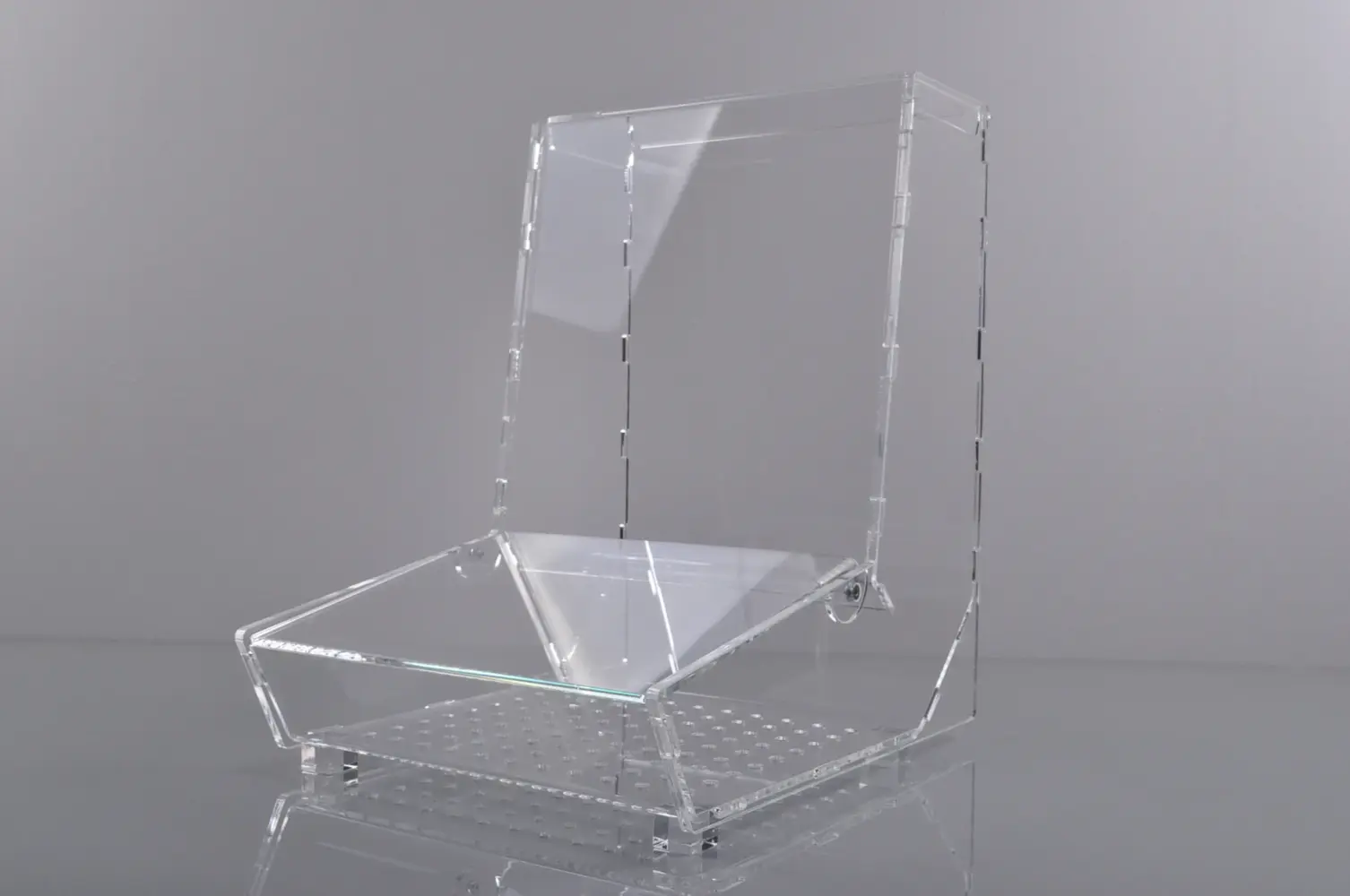
Acrylic (PMMA) is one of the plastics used in contact with food: bulk sweet dispensers, nut hoppers, catering trays, wafer cone holders and patisserie display cases. What makes it suitable is not the name of the material, but that the specific grade of sheet complies with the regulations and comes with its documentation.
In practice, that means three things: a material declared compliant by its manufacturer, use within the conditions of that declaration (type of food, temperature, time) and a piece in good condition. Heavily scratched or deteriorated acrylic should no longer be in contact with food.
What European regulations require (explained without jargon)
In the European Union, materials that will touch food are governed by a framework regulation and, in the case of plastics, by a specific one. You do not need to know them in depth to order a piece, but you do need to know what to ask for.
- Regulation (EC) No 1935/2004. This is the general framework: the material must not transfer substances to food in quantities that pose a health risk, nor alter its composition, taste or smell. It also establishes the glass-and-fork symbol that identifies materials intended for contact with food.
- Regulation (EU) No 10/2011. It regulates plastic materials and articles: which substances may be used, how much may migrate into food and under which test conditions. It requires the material to be accompanied by a declaration of compliance throughout the supply chain.
- Regulation (EC) No 2023/2006. It requires these materials to be manufactured under good manufacturing practice.
Both regulations have been amended several times; the consolidated version is on EUR-Lex. This article is practical guidance, not legal advice: if in doubt, consult the person responsible for food safety in your business.
Direct contact or protection only: not the same thing
Not every acrylic piece in a kitchen or on a counter is “in contact with food”. Telling them apart helps you choose well and avoid making pieces that do not need it more expensive.
- Direct contact: the food touches the piece in normal use. Bulk dispensers and hoppers, trays, dishes with dividers, wafer cone holders, sweet boxes. Here the material must be suitable and documented.
- Protection or display: the piece separates or protects, but the food does not touch it. Counter dividers, customer service screens, display case fronts. Here what matters is that it is easy to clean and durable.
The boundary is not always clear: a display case on which cakes rest, or a divider brushed by serving tongs, ends up being contact. If in doubt, treat it as a contact piece.
Which material to choose for each food use
Acrylic is the best option when the product needs to be seen; it is not when the piece is cut, knocked or heated. This table summarises the usual choice:
| Use | Recommended material | Why |
|---|---|---|
| Display cases, displays and counter dividers | Acrylic | Transparency, good looks and easy cleaning |
| Dispensers and hoppers for sweets or nuts | Food-grade acrylic | The product touches the piece and has to be visible |
| Cold trays and dishes for catering | Food-grade acrylic | Light, transparent and customisable |
| Chopping boards and work surfaces | Polyethylene PE 500 | Withstands knives and washing; does not splinter |
| Guides, wheels and food machinery parts | Polyethylene PE 1000 (UHMW-PE) | Low friction and high abrasion resistance |
| Machine guards that may take knocks | Polycarbonate | Virtually unbreakable |
| Pieces in contact with hot food (above about 70–80 °C) | Not acrylic; ask about another material | PMMA softens at around 80 °C |
To compare engineering plastics in more detail, see which plastic to choose for machining.
Limits of acrylic in hospitality
Almost all problems with acrylic pieces in hospitality come from three causes: heat, unsuitable cleaning products and scratching. Knowing them greatly extends the life of the piece.
Temperature
Acrylic starts to soften at around 80 °C. Do not use it with freshly cooked food, hot trays, direct steam or near ovens or griddles.
Cleaning and disinfection
Warm water, mild soap and a soft cloth. No alcohol, solvents, scourers or glass cleaners with ammonia: they cause micro-cracks and scratches. The dishwasher is not recommended either. If your hygiene protocol requires a disinfectant, choose one compatible with PMMA according to the manufacturer’s data sheet.
Scratching and wear
Acrylic has a hardness similar to that of aluminium: knives and metal utensils scratch it. Surface scratches can be polished out, but a heavily scratched contact piece should be replaced, because scratches retain dirt. That is why, for cutting, polyethylene.
Pieces we make for hospitality and food
In our workshop we have made, for the sector, wafer cone holders with UV printing and polycarbonate hinges, nut hoppers, sweet dispensers in stackable modules, multi-tier dessert displays, counter dividers and protectors for terrace tables. You can see photos and details in custom acrylic displays, and guards for machines in polycarbonate machine guards.
Each piece can carry the name or logo of the venue with laser engraving or UV printing on acrylic, and one-piece shapes are achieved with acrylic thermoforming.
When to order it from a workshop
Order it from a workshop when the piece is not available in standard sizes, when it has to fit a specific counter or machine, or when you need a series with your brand. At Apligam, a family factory since 1970, we make custom acrylic pieces for hospitality and food, from a single unit to series.
Tell us which food you are going to display or serve, in what space and how many units you need. We will propose the right material and tell you which documentation comes with it.
Looking for a standard model? There are standard models with prices at Crilato, our online shop (in Spanish): an ice-cream display and other products for hospitality.
Frequently asked questions
Is all acrylic food safe?
Not necessarily. PMMA is a plastic that can be manufactured to be suitable for food contact, but suitability is certified by the manufacturer of each sheet grade with its declaration of compliance, for specific conditions of use. A sheet without that documentation should not be used for pieces that touch food, even if it looks the same.
What document should I ask for with an acrylic piece in contact with food?
The material’s declaration of compliance, which Regulation (EU) No 10/2011 requires for plastics intended to come into contact with food. It states which regulations it complies with and under which conditions: type of food, temperature and contact time. Ask for it when you order the piece and say which food it will be used for.
Can acrylic be washed in the dishwasher?
We do not recommend it. The high rinse temperatures and dishwasher detergents, especially industrial ones, can deform acrylic or cause micro-cracks over time. Wash it by hand with warm water and mild soap and dry it with a soft cloth. If your venue needs dishwasher-safe pieces, another material has to be considered.
Can acrylic be disinfected with alcohol?
It is best not to. Alcohol and solvent-based products attack acrylic and cause micro-cracks, especially on laser-cut edges and bonded areas. To disinfect, use products that the sheet manufacturer declares compatible with PMMA, at the stated dilution, and rinse with water.
Is acrylic suitable for hot food?
Only for warm or cold food. Acrylic starts to soften at around 80 °C, so it must not be in contact with freshly cooked food, hot trays or direct steam. For displaying pastries, sweets, nuts, ice cream or cold dishes it works very well.
Does a display case or counter divider have to be made of food-safe material?
If the food does not touch it in foreseeable use, the piece acts as protection rather than as a contact material. In practice, however, many display cases and dividers end up touching the product or the serving tongs. If that is possible, the prudent approach is to treat it as a contact piece and ask for the material with its declaration of compliance.